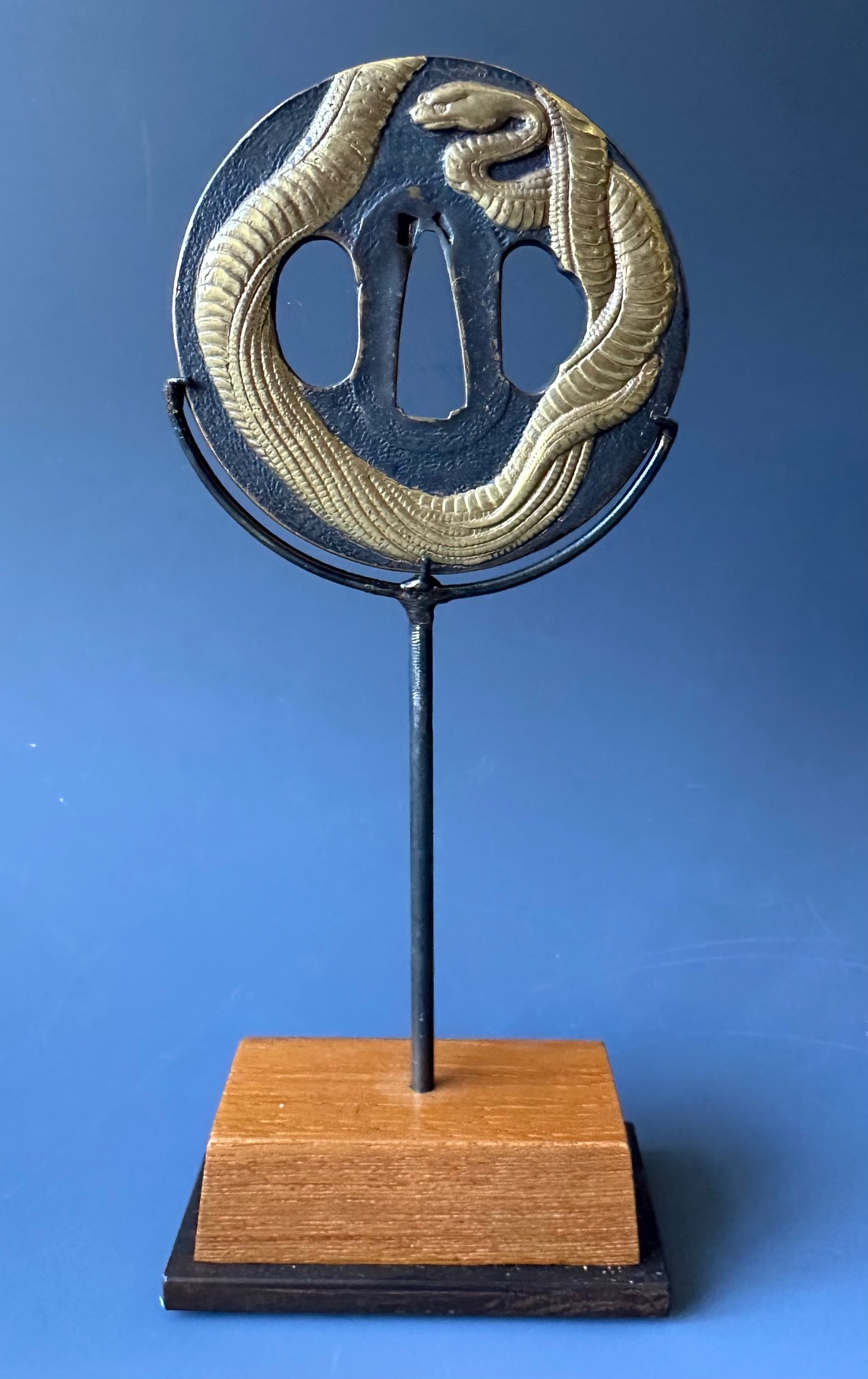
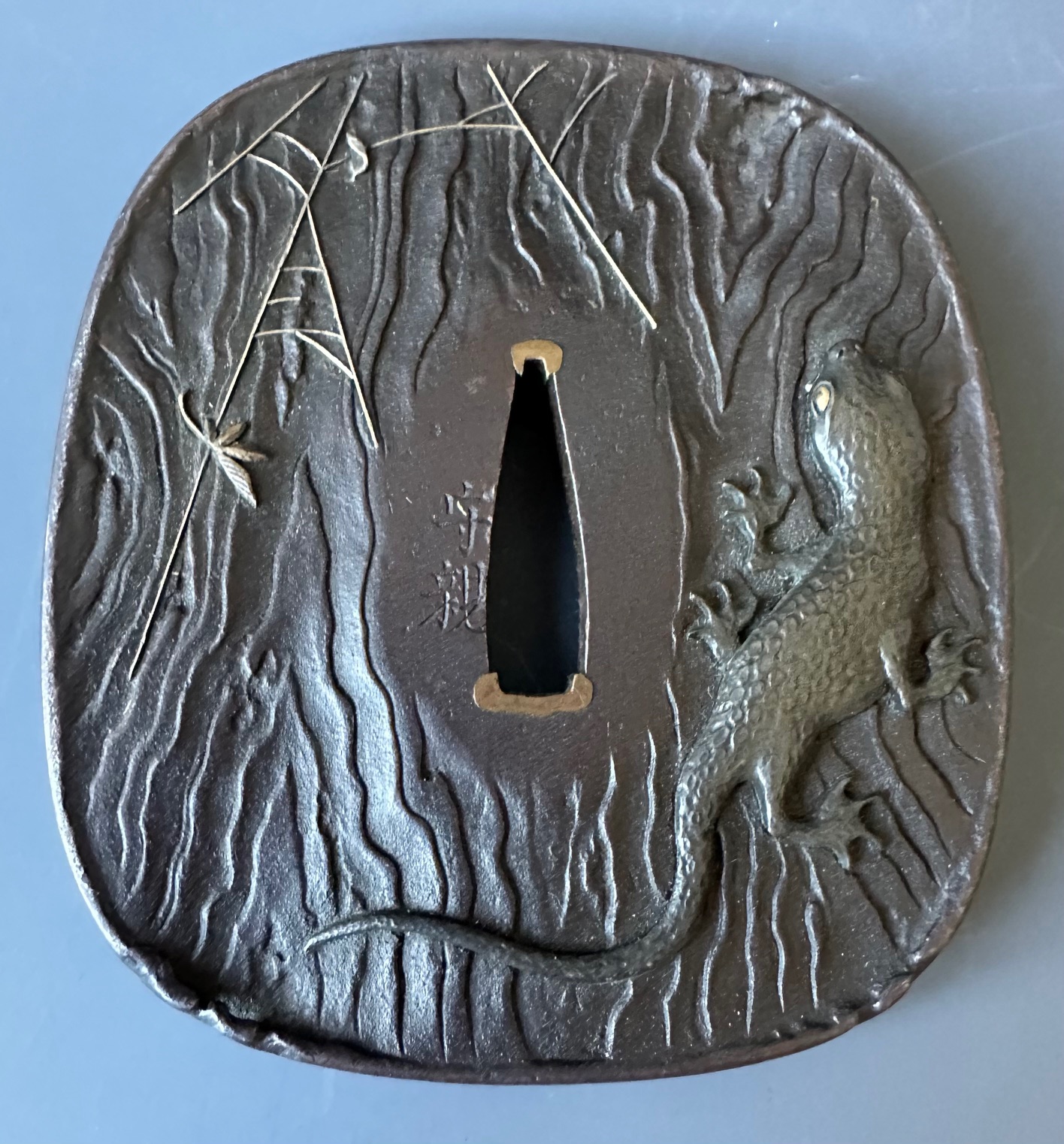
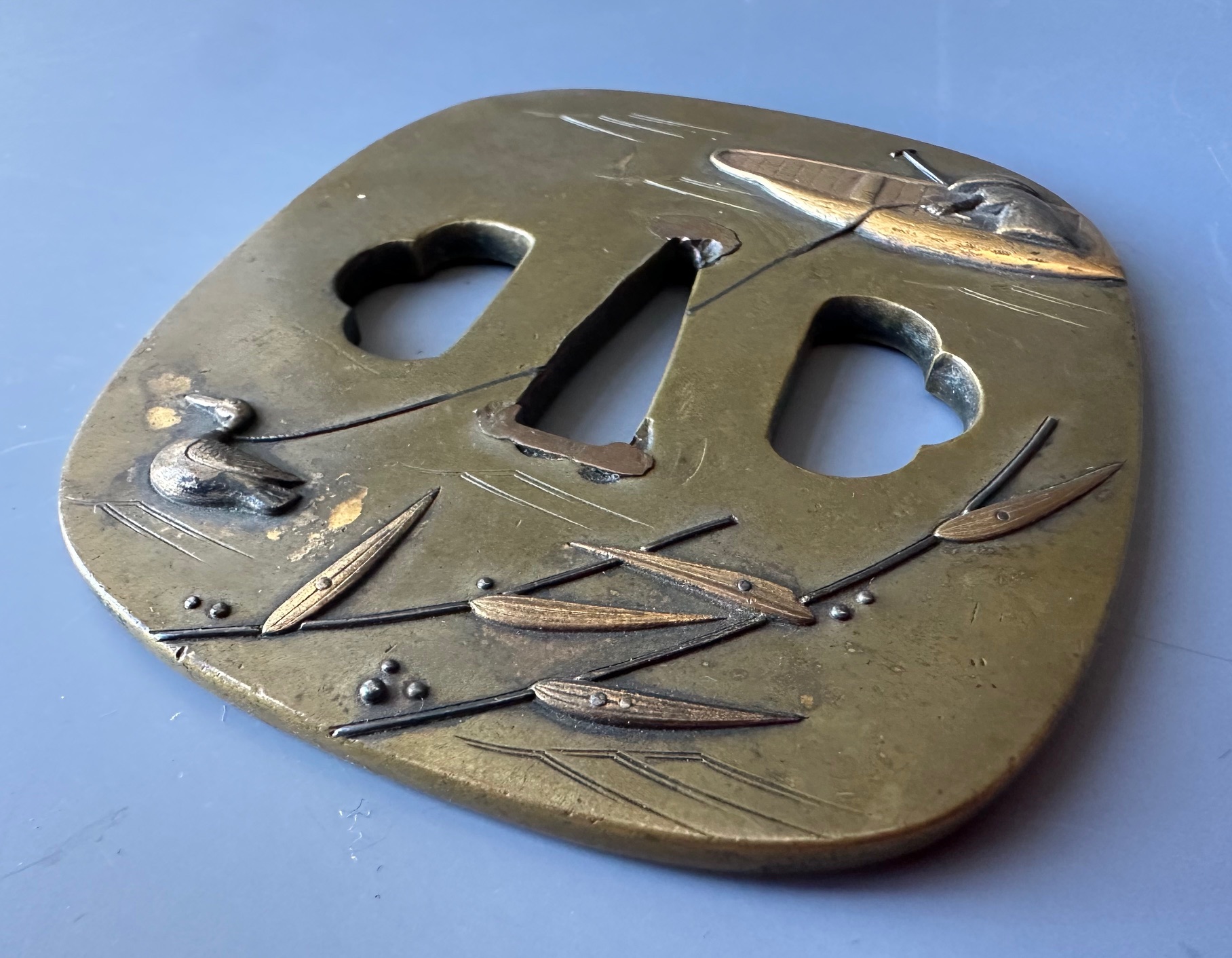
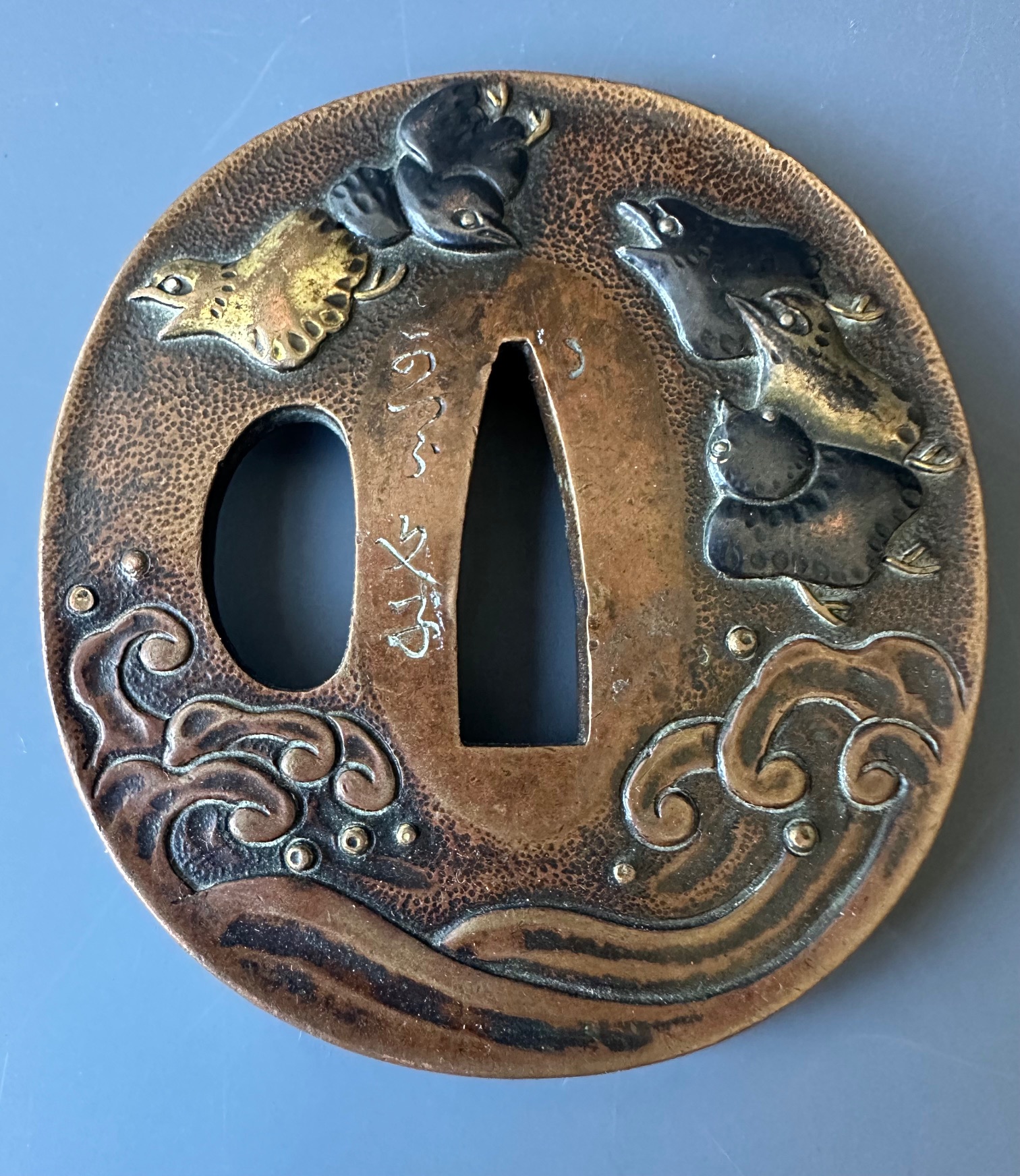
Antique Japanese Iron Tsuba – Insect Motif Mixed Metal Inlay, Edo Period
$31.29
$37.86
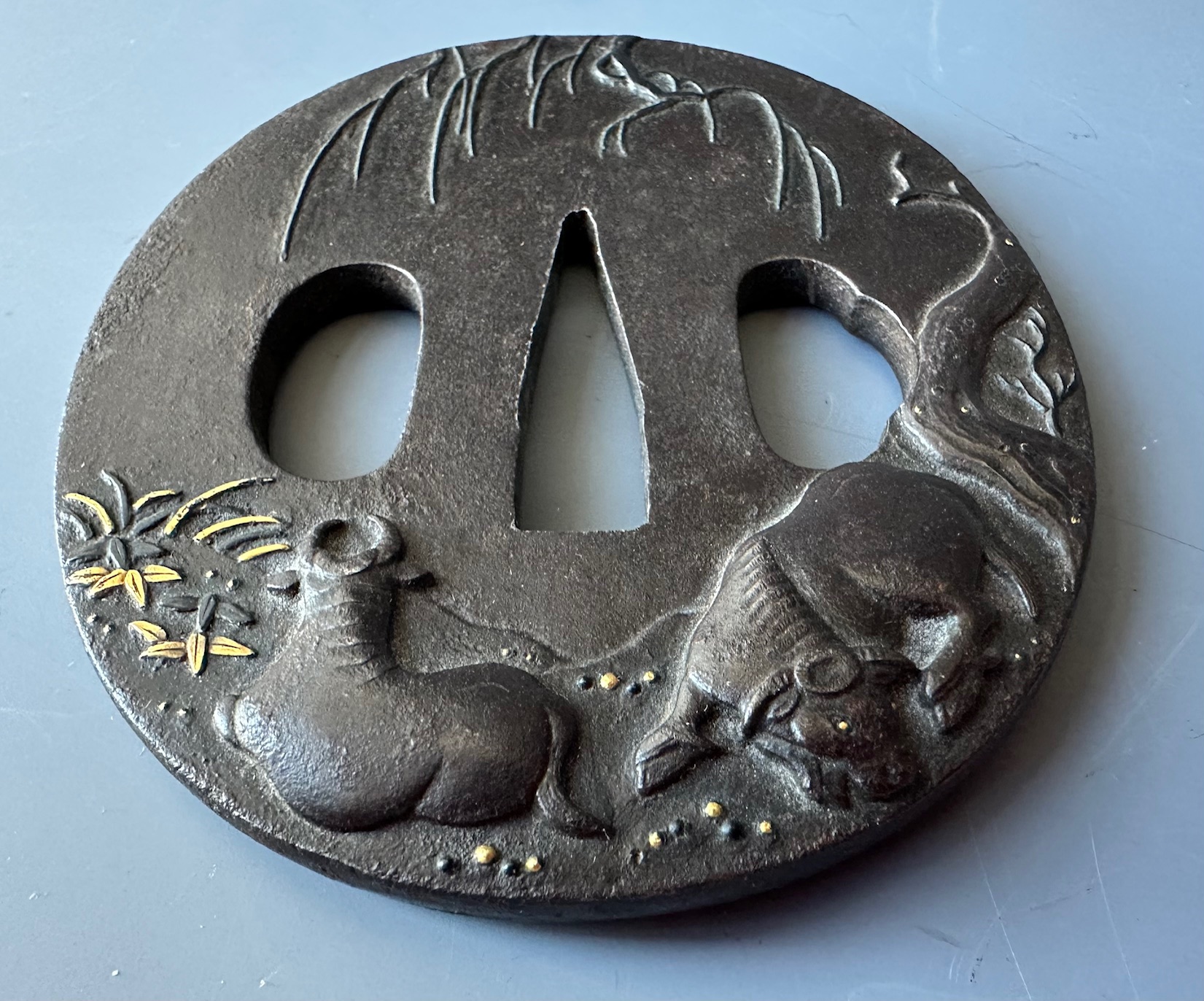
DescriptionA refined and poetic antique Japanese iron tsuba from the Edo period, masterfully decorated with a naturalistic composition of seasonal insects—cricket, bee, and cicada—rendered in delicate relief with subtle mixed metal (gold & silver) accents.The tsuba displays a beautifully aged iron surface with a rich, warm brown patina, showing soft textural variation developed over centuries. Emerging from this ground are finely sculpted insects: a cricket with elongated legs and antennae extending gracefully along the lower edge, a cicada resting near the upper field, and a small bee captured in motion. Each figure is sensitively carved, with touches of gold and soft metal inlay highlighting key details and bringing a quiet vitality to the composition.The design incorporates understated sukashi (openwork), allowing negative space to enhance the overall balance without overpowering the subject. A faintly incised signature or inscription appears beside the nakago-ana, adding further character and potential attribution.The imagery reflects a deeply rooted Japanese aesthetic—observational, seasonal, and contemplative—capturing fleeting moments in nature with restraint and elegance.A tsuba is the hand guard of a Japanese sword, positioned between the blade and the handle. While originally functional—protecting the hand and helping balance the weapon—tsuba evolved into highly expressive works of art during the Edo period. Samurai selected tsuba that reflected their personal taste, philosophy, and connection to nature.Insect motifs such as those seen here carry layered meaning: crickets evoke autumn and quiet reflection, cicadas symbolize impermanence and renewal, and bees represent diligence and harmony within nature. Together, these elements transform the tsuba into a poetic statement rather than a purely utilitarian object.Age: Edo period 1603 – 1868Dimensions: 3″ diameter